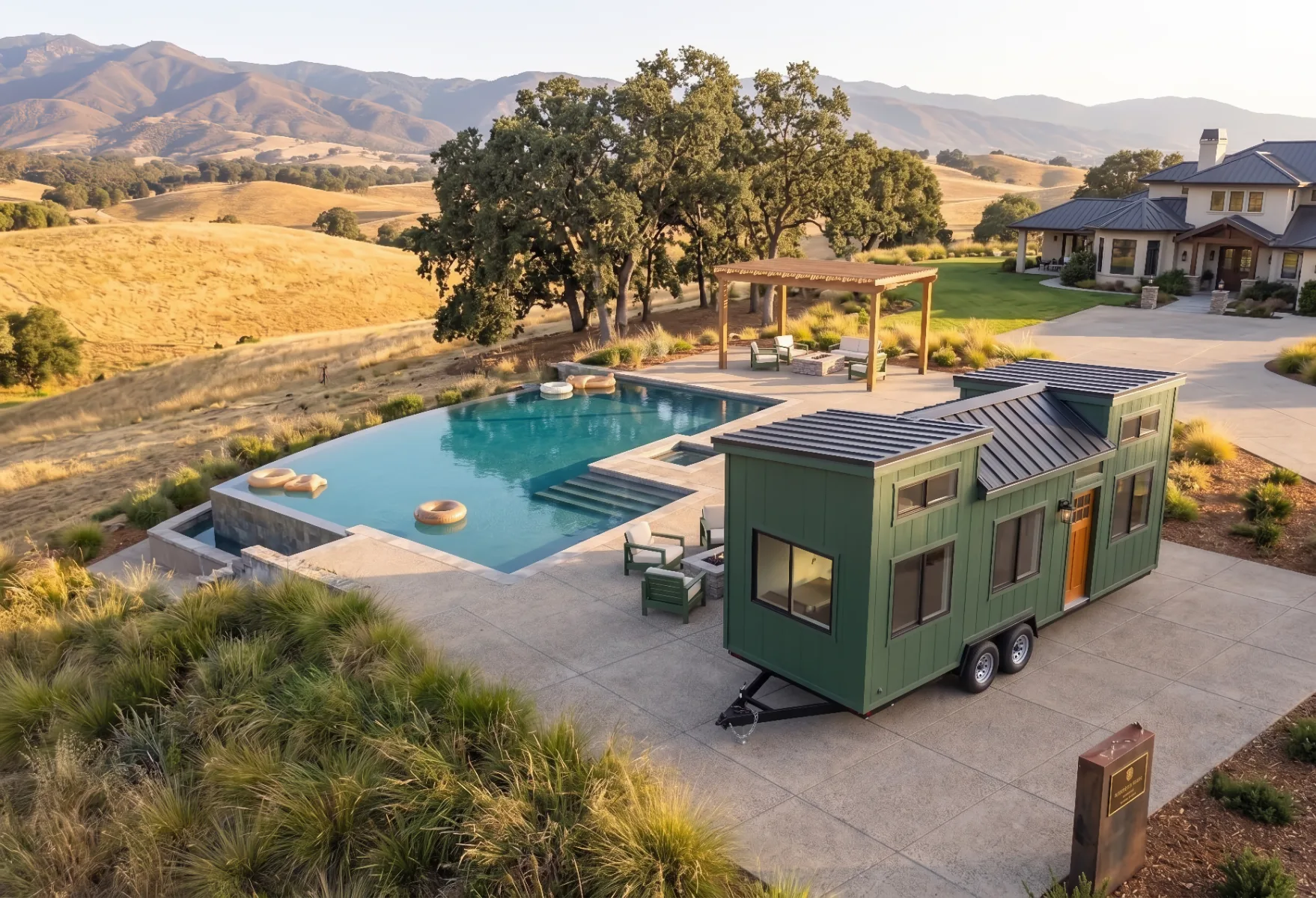
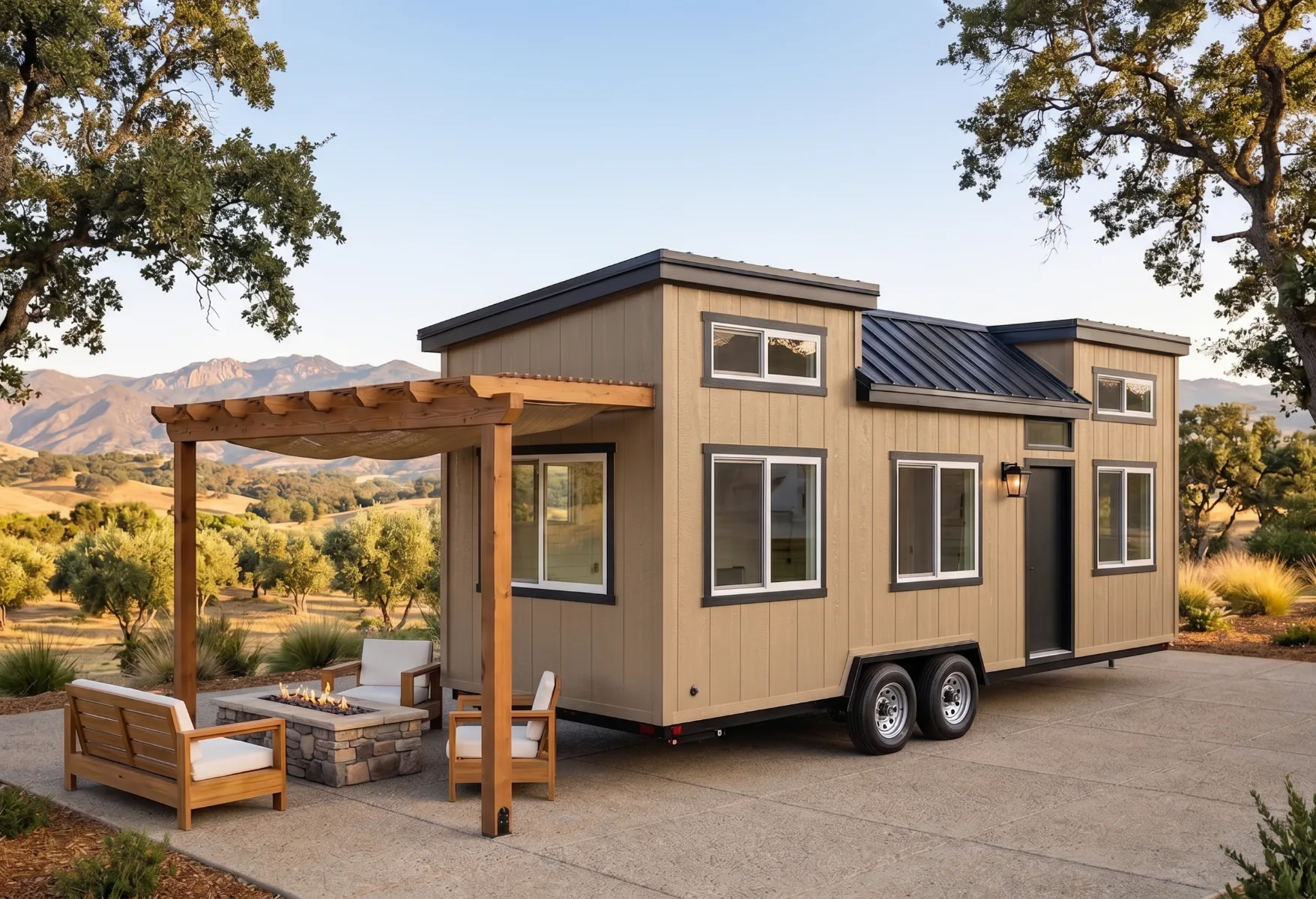
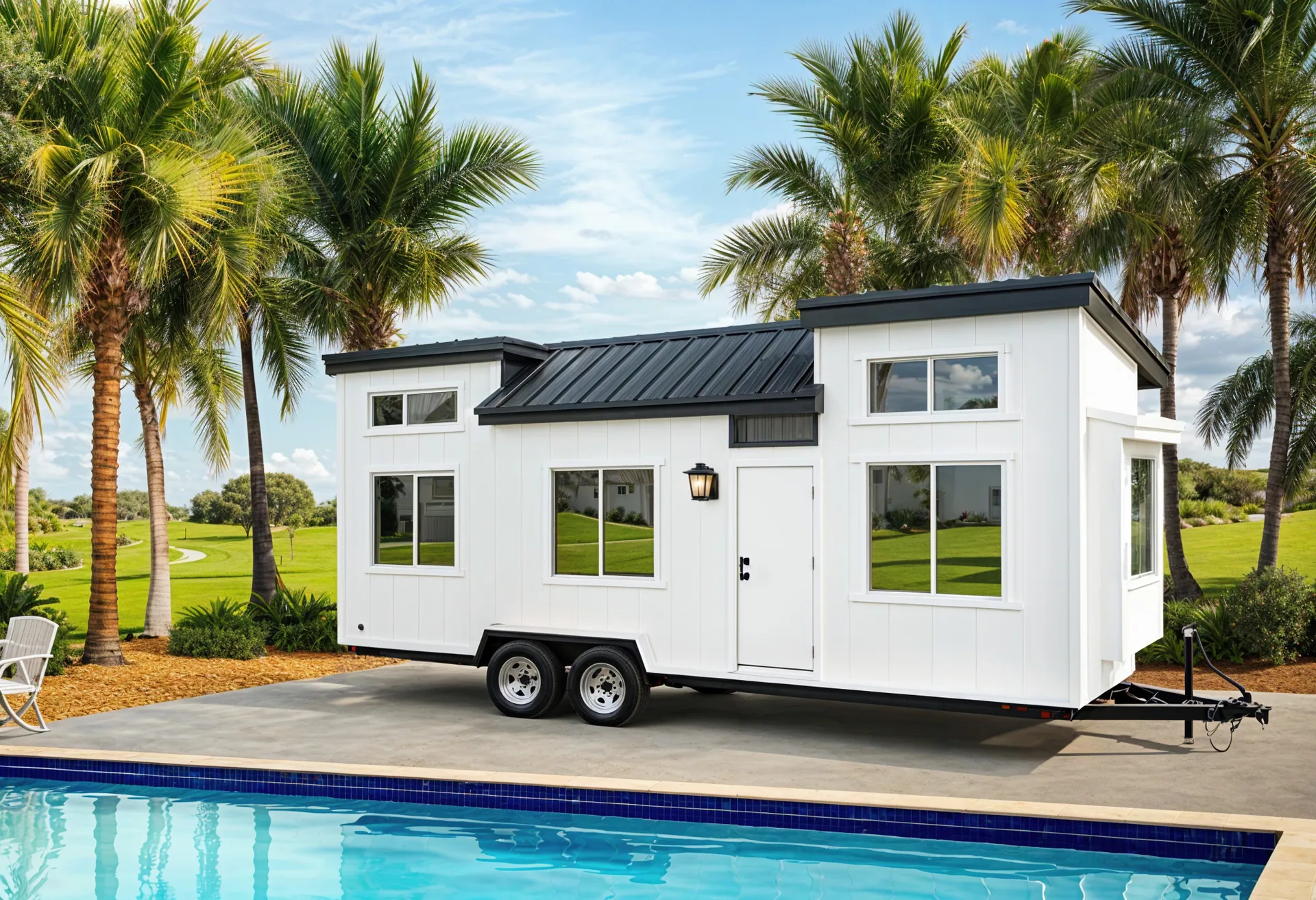
Adding a tiny home to your backyard can create extra living space, rental income, a private guest house, or housing for family members. But in California, you cannot assume that every tiny home can legally be placed on every property.
The rules depend on how the unit is built, how it will be used, and the city or county where the property is located.
Is a Tiny Home the Same as an ADU?
Not always.
A tiny home may be built on a permanent foundation, constructed as a prefabricated structure, or placed on a trailer with wheels. The legal classification matters because different building, zoning, utility, and occupancy rules may apply.
A permanently installed tiny home may qualify as an accessory dwelling unit, commonly called an ADU, if it meets the applicable state and local requirements.
A tiny home on wheels may be treated differently and may not automatically qualify as a legal residence.
Check Your Local Zoning Rules
California has statewide laws that support ADU construction, but cities and counties still control many local requirements.
Before choosing a model, confirm:
* Whether an ADU is allowed on the property
* Required setbacks from property lines
* Maximum unit size and height
* Fire-access requirements
* Parking requirements
* Utility connection standards
* Septic or sewer capacity
* Historic district or design restrictions
Do not purchase a unit before confirming that it can be legally installed on the intended property.
Will You Need a Permit?
In most cases, a backyard tiny home intended for residential occupancy will require permits.
Depending on the project, permits may include:
* Building
* Electrical
* Plumbing
* Mechanical
* Grading
* Utility connection
* Septic approval
* Fire department review
Permit requirements vary by jurisdiction and by the construction method of the home.
Permanent Foundation vs. Tiny Home on Wheels
A permanent foundation usually provides a clearer path for legal residential use because the home can be reviewed under applicable residential building and ADU standards.
Tiny homes on wheels can be more complicated.
Some jurisdictions may treat them as recreational vehicles, park trailers, or movable units rather than permanent housing. That can restrict full-time occupancy, utility connections, placement, and rental use.
Mobility does not automatically eliminate permit or zoning requirements.
Can You Rent It Out?
A legally permitted backyard unit may be used as a long-term rental in many areas, subject to local rules.
Short-term rentals, including Airbnb-style rentals, may face additional restrictions, registration requirements, taxes, owner-occupancy rules, or outright prohibitions.
Do not assume that ADU approval automatically includes short-term rental approval.
What Utilities Will the Tiny Home Need?
A backyard tiny home may need connections for:
* Electricity
* Water
* Sewer or septic
* Gas or propane
* Internet
* Drainage
The cost of utility work can significantly affect the total project budget.
Long utility runs, trenching, electrical-panel upgrades, septic expansion, and difficult site access can add substantial cost.
Site Access Matters
A property may appear large enough for a tiny home but still be difficult to build on.
Before installation, evaluate:
* Driveway width
* Crane or delivery access
* Overhead power lines
* Trees and landscaping
* Slopes
* Retaining walls
* Gates
* Neighboring structures
* Fire-truck access
Delivery and installation planning should happen before the home is manufactured.
How Long Does the Process Take?
The timeline depends on the jurisdiction, design, property conditions, engineering, utility work, and permit-review process.
The project usually includes:
* Property evaluation
* Preliminary design
* Local planning review
* Engineering
* Permit submission
* Site preparation
* Utility installation
* Home delivery or construction
* Final inspections
Starting with a property review helps prevent delays and expensive redesigns.
Is a Backyard Tiny Home a Good Investment?
A well-planned tiny home can add flexibility and usable living space to a property.
Common uses include:
* Long-term rental housing
* Guest accommodations
* Housing for aging parents
* Multigenerational living
* A private office
* A studio
* Housing for adult children
The value depends on legal approval, construction quality, site conditions, and how well the unit fits the property.
Start With the Property, Not the Floor Plan
The biggest mistake is falling in love with a model before confirming what the property allows.
At Smarter Tiny Homes, we help homeowners evaluate practical options for adding well-designed living space to their property.
Before moving forward, confirm local zoning, permits, access, utilities, and installation requirements.
Contact Smarter Tiny Homes to explore available models and discuss the next steps for your backyard project.
Browse ModelsRequest A Quote